AED certification classes in Colorado teach people how to use an automated external defibrillator (AED) during a cardiac emergency. Students learn how to spot signs of cardiac arrest, turn on the device, place the pads, and follow its voice instructions.
Through live demonstrations and hands-on practice, JM LifeSafety helps participants learn the right steps to take during an emergency.
Table of Contents
- What Do AED Certification Classes Cover?
- How Do Students Learn to Use an AED?
- Why Is Hands-On AED Practice Important?
- How Does AED Training Work With CPR?
- What Safety Rules Do Students Learn?
- Who Can Benefit From AED Certification?
- Frequently Asked Questions
What Do AED Certification Classes Cover?
AED certification teaches students how to respond when someone has a sudden cardiac arrest. They learn how to check if a person is breathing, call 911, start CPR, and use an AED.
The main topics covered in class include:
- Recognizing cardiac arrest: Students learn to spot when a person is unresponsive and not breathing normally.
- Calling for help: Participants learn when to call 911 and how to get help from others nearby.
- Learning about AEDs: Instructors explain how an AED checks the heart's rhythm and decides if a shock is needed.
- Following emergency steps: Students learn how to use CPR and an AED together while waiting for medical help.
Through AED certification classes in Colorado, students learn simple and clear steps to follow during a cardiac emergency.
How Do Students Learn to Use an AED?
An AED is designed to guide users through each step with voice and screen instructions. However, students need to practice before they can use the device with confidence.
During class, instructors show participants how to use an AED. Students then practice each step with training equipment.
The main steps include:
- Turn on the AED: Open the device and press the power button. Listen to the voice instructions.
- Prepare the chest: Make sure the person's chest is bare and dry before placing the pads.
- Place the pads: Attach the pads to the chest by following the pictures shown on them.
- Check the heart rhythm: Make sure nobody touches the person while the AED checks the heart.
- Give a shock if advised: If the AED tells you to give a shock, make sure everyone moves away before pressing the shock button.
- Start CPR again: Follow the AED instructions and restart chest compressions as soon as directed.
These lessons help students understand how the device works and what to do at each stage.
Why Is Hands-On AED Practice Important?
Reading about AED use is helpful, but practice gives students a better idea of what to do during an emergency. It allows them to use the device, place the pads, and follow the voice instructions in a safe setting.
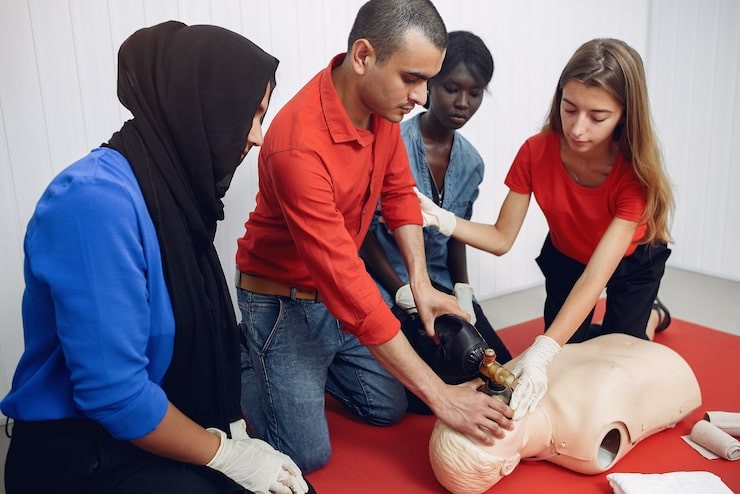
During AED training in Colorado, students can practice with training devices and CPR manikins. Instructors guide them through each step and correct mistakes during practice.
Hands-on lessons may include:
- Turning on a training AED.
- Placing the pads in the correct positions.
- Following the device's voice instructions.
- Making sure everyone moves away before a shock.
- Restarting CPR after the AED checks the heart.
Regular practice helps students become familiar with the process before a real emergency happens.
How Does AED Training Work With CPR?
CPR and AED use work together during sudden cardiac arrest. CPR helps keep blood moving through the body, while an AED checks the heart's rhythm and gives a shock when needed.
During training, students learn how to move between CPR and AED use. They practice chest compressions, pause when the device checks the heart, and restart CPR when instructed. This helps students understand how both skills work together. These lessons prepare them to act quickly and follow the right steps while waiting for emergency medical help.
What Safety Rules Do Students Learn?
Using an AED also means following basic safety rules. Students learn how to use the device without putting themselves or others at risk.
Important safety rules include:
- Make sure the person's chest is dry before placing the pads.
- Do not touch the person while the AED checks the heart rhythm.
- Keep the device away from water.
- Check for medicine patches or implanted devices before placing the pads.
- Make sure everyone moves away before a shock.
- Follow the AED's voice instructions from start to finish.
These simple rules help students use the device safely during an emergency.
Who Can Benefit From AED Certification?
AED certification is useful for anyone who may need to help during a cardiac emergency. Learning how to use a defibrillator can help people respond at work, school, or in public places.
The training can benefit:
- Teachers and school staff.
- Office workers and workplace safety teams.
- Sports coaches and trainers.
- Gym and fitness staff.
- Childcare workers.
- Community volunteers.
- People who want to learn basic emergency skills.
With AED certification classes in Colorado, participants can learn how to use a defibrillator and help someone during a medical emergency.
Frequently Asked Questions
Q1 - How Long Does an AED Certification Class Take?
Ans - The class length depends on the course and whether CPR training is included. Contact us for details about course schedules, practice time, and certification requirements.
Q2 - Do I Need CPR Experience Before Learning AED Use?
Ans - No. Many CPR and AED courses welcome beginners. Instructors explain the basic skills, show how to use the device, and guide students through practice so they can learn each step.
Q3 - Can Beginners Learn to Operate an AED?
Ans - Yes. AEDs give voice and screen instructions to guide users. Training helps beginners learn how to place the pads, follow directions, and use the device during a cardiac emergency.
Q4 - Does AED Certification Include Hands-On Practice?
Ans - Course activities depend on the training program. Students may practice with training AEDs and CPR manikins to learn pad placement, follow voice instructions, and understand the steps involved in an emergency.
Q5 - Why Should Workplaces Provide AED Training?
Ans - AED training teaches employees how to respond when someone has a cardiac emergency. They learn to call 911, begin CPR, and use an available defibrillator while waiting for medical help.
Learn AED Skills With JM LifeSafety
Knowing how to use an AED can help you take action during a cardiac emergency. We provide training to help people learn proper defibrillator use, practice key skills, and understand how to respond.
Explore the available courses and take the next step toward a safer workplace and community.